 Gather Studio
It was 3am when I realized I had a problem with my AI assistant.
Not the kind they write about in think pieces. The tool worked. That was the problem.
I'd ask something. The answer appeared before I'd finished forming a second thought. I'd read it, react, ask again. No pause. No friction. The conversation moved at the speed of anxiety.
I was producing. I wasn't thinking.
---
The fix came by accident.
I started using Telegram to talk to my AI agent instead of the direct terminal interface. A minute would pass between my message and the response. Sometimes longer.
That minute changed everything.
I'd send something, and then there was nothing to do but sit with it. Think about what I'd actually asked. Wonder if it was even the right question. By the time the answer arrived, I'd already worked on the problem myself. The response became a check on my thinking, not a replacement for it.
Friction is where reflection lives.
---
The same principle applies to the Pomodoro timer I've been using for my books.
Twenty-five minutes of writing. Five minutes of rest. Repeat.
The rest isn't dead time. It's when the chapter you just wrote settles into your body. When you notice what's wrong with it. When the next line you need finds you.
Take the break away and you get more words. Worse writing.
Friction is where reflection lives. The pause isn't the interruption. The pause is the work.
---
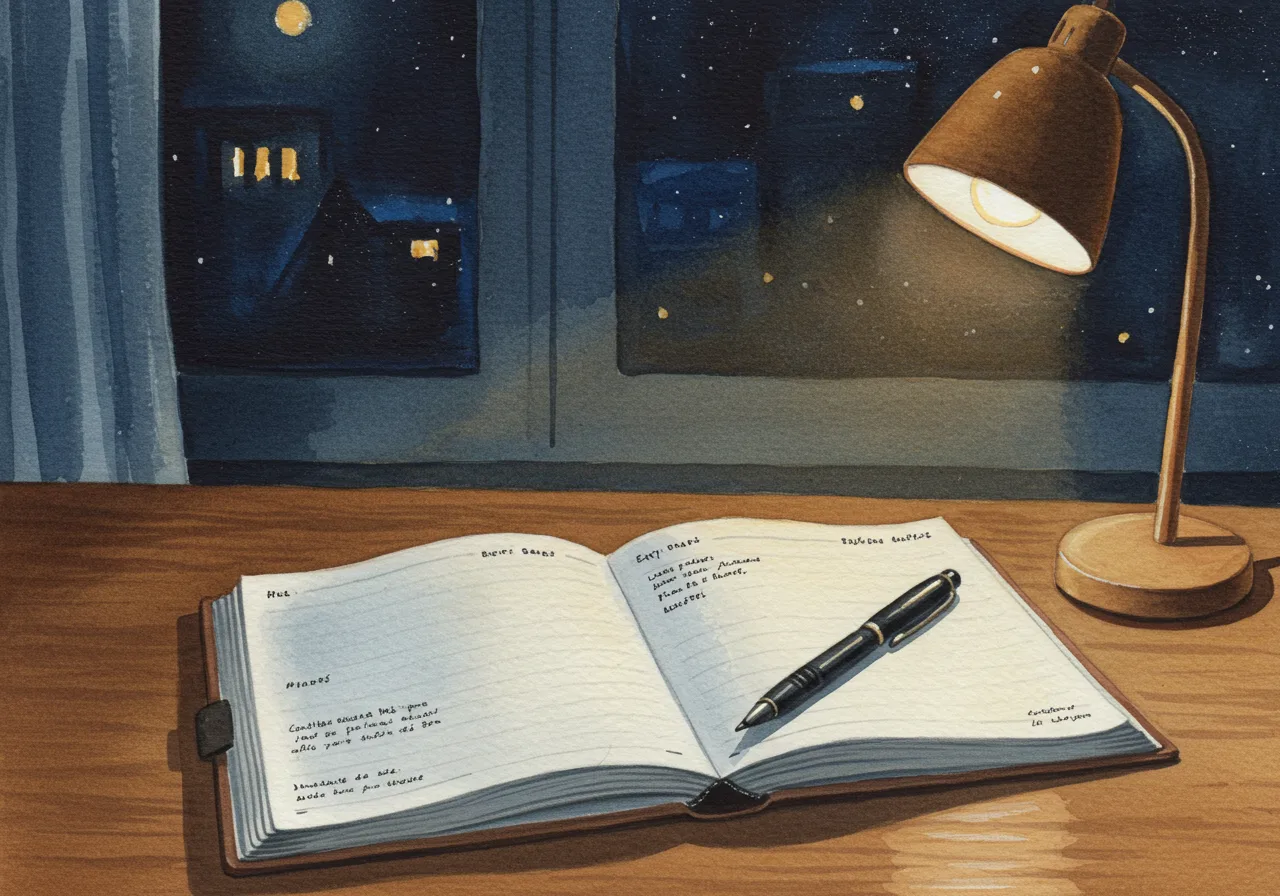
I've been waking up at 3am some mornings to write. Not because I'm disciplined. Because my mind is clear then. Nobody needs me. No context-switching. The world hasn't started yet.
For a long time I'd immediately open the laptop. Start a session. Get going.
Now I write by hand first.
The AI doesn't see the 3am material until I've already decided it's worth something. That's the gate. Not word count. Not output. Just the question: is this worth developing?
Sometimes the answer is no. Those pages stay in the notebook. They fed the work anyway.
---
There's a season I think about, before my first serious episode of depression. I was listening to Marie Forleo talk about time auditing. Not tracking to hit a goal, but tracking to notice patterns. Productive ones. Destructive ones. The ones you're too busy to see because you're in them.
I've been thinking about building that kind of audit for myself. A system that tracks not just hours but quality. What was I producing at 3am versus 9am? When does the writing happen and when does the performance of writing happen?
It's the kind of awareness that protects you before you need protection.
---
Friction as the work, friction as the practice
Here's something that started as a small thought and won't let go.
Removing friction for other people is the whole job.
Every client I work with at Gather Studio, every couple who goes through Tend, every profile I write for Southern Legends: the point is to take complexity and confusion and make it simple. To absorb what's hard so the person on the other end just gets clarity.
That is the suffering servant model. You carry the cognitive weight so they don't have to.
But I've realized: increasing friction for myself is the practice that makes that possible.
The Telegram lag. The hand-written first draft. The Pomodoro break. The 30-minute check-in where I'm asked what I'm working on. Not to report to someone. To report to myself.
These are not obstacles. They are the conditions under which I actually think.
And the irony is that when I slow down like this, I get better work out to more people. The clarity I produce in a 25-minute session with a five-minute break, after 45 minutes of writing by hand in the dark, is sharper than six hours of constant output.
Friction for the creator. Frictionlessness for the reader.
That's the model.
---
What I'm building
I want a system that does a few things:
Starts the timer automatically in the morning. Fires Endel or whatever music I need to get into a creative state. Pings me every 30 minutes, not to interrupt but to anchor. What's your focus right now?
And then reviews the day. Not a grade. A mirror. What was I doing when the work was good? When was I spinning?
The time-audit season Marie Forleo described. I want to build that as a practice and then write about what I find. Because I think a lot of people are in the same place: producing constantly, thinking rarely, wondering why the output doesn't feel like them.
The pause is the thing.
---
If something in this landed, the Plainspoken Blueprint is my framework for building a message that's actually yours. Not clever. Not impressive. Just specific and true. Start with a session.